

Front bezels
Best for framing a visible control surface, protecting edges, defining windows, and matching the product’s industrial design.
The mechanical foundation of a reliable interface.
Frames, bezels, and supports are custom structural parts used around, in front of, or behind an electronic interface.
They are structural components—not complete housings, keypad assemblies, seals, or adhesive systems by themselves. Their role is to give the interface the physical support, alignment, and protection required by the product architecture.
ALMAX develops custom frames, bezels, and supports that locate, reinforce, protect, and finish keypads, displays, touch interfaces, and other human-machine interface assemblies. These components help the interface fit the enclosure, maintain its intended geometry, and perform consistently in the finished device.
This page focuses on Frames, Bezels & Supports as product-specific structural elements for interface alignment, reinforcement, retention, and front-face integration; related products and technologies are mentioned only where they help explain construction choices, integration, alternatives, or system fit.
These structural elements sit at the boundary between the interface and the rest of the device. Depending on the design, they may be visible trim, hidden internal carriers, rigid backers bonded behind a membrane stack, or supports positioned around a display, circuit, sensor, or connector.
The geometry must preserve active areas, key travel, viewing zones, signal routing, fastener access, and the intended assembly sequence.
A frame, bezel, or support creates controlled mechanical relationships between parts.
The enclosure, operator, handling environment, or assembly process applies loads and tolerances to the product. The structural component distributes those loads, locates the interface, limits unwanted flex, protects exposed edges, or maintains compression where the design requires it. The result is a more stable interface with repeatable alignment, cleaner installation, and better protection of sensitive layers.
For tactile key fields, a flat, rigid support can help the switch stack deliver consistent feel. For displays and touch surfaces, a bezel or frame can define the viewing opening and maintain alignment. For serviceable products, a mechanically retained carrier can make removal and replacement more practical than an adhesive-only installation.
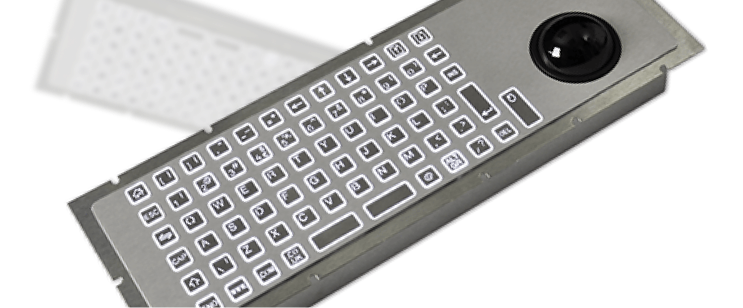
Front bezels
Best for framing a visible control surface, protecting edges, defining windows, and matching the product’s industrial design.
Mounting frames
Used when the interface needs repeatable location, mechanical retention, controlled compression, or service access.
Rigid backer plates
Best for supporting membrane switches, dome fields, flexible circuits, or overlays that require stiffness and flatness.
Internal support panels
Used to reinforce larger areas or provide a mounting plane for circuits, displays, lighting, and interconnects.
Carriers with alignment features
Used when bosses, pins, rails, tabs, or datums must register several parts during assembly.
Hybrid structures
Combine a visible bezel with a hidden frame, backer, gasket seat, cable guide, or other product-specific support feature.
Frames, bezels, and supports are used in products where interface fit and stability affect usability, durability, appearance, or assembly quality.
The same structural category may serve very different purposes: a thin metal backer can stiffen a membrane keypad, while a molded bezel can frame a display and guide the user’s hand around controls.
Benefits include:
More consistent interface performance
Proper support can reduce unwanted flex, help maintain alignment, and create a stable foundation for switches, sensors, displays, and optical components.
Simpler mechanical integration
Locating features, mounting points, cable paths, and controlled openings can be designed as one coordinated system.
Fewer late-stage fit problems
Reviewing the structural design with the electrical, graphic, optical, and sealing requirements helps identify interference before production tooling or final assembly.
Better perceived quality
Clean edge treatment, stable surfaces, controlled gaps, and aligned graphics contribute to a more finished product experience.
Improved manufacturability and serviceability
A purpose-built carrier or frame can support repeatable installation, inspection, and replacement where the product architecture requires it.
Custom design freedom
ALMAX can develop the structural solution around the device instead of forcing the interface into a standard off-the-shelf frame.
Material selection depends on the structural, cosmetic, environmental, and production requirements of the application.
Aluminum
A common option for lightweight rigid backers, frames, and finished bezels.
Stainless or coated steel
Considered when greater stiffness, wear resistance, grounding, or robust retention is important.
FR4
Useful as a rigid support compatible with electronic assembly practices and PCB-based constructions.
Polycarbonate, ABS, nylon, acrylic, and other engineered plastics
Suitable for molded, machined, or cut structures where weight, insulation, appearance, optical behavior, or complex geometry matters.
Composite or multi-part constructions
Used when one material cannot efficiently provide every required mechanical, cosmetic, electrical, or environmental property.
Possible processes include machining, molding, forming, cutting, finishing, bonding, and mechanical assembly. The final method is selected around geometry, tolerances, quantities, tooling, finish requirements, and total delivered cost.
Long-term behavior depends on the complete structural design and its operating environment. Important factors include material stiffness, creep, impact loading, vibration, fastener loads, adhesive performance, thermal expansion, corrosion, cleaning exposure, UV exposure, dimensional stability, and repeated service handling.
Depending on the design, materials and finishes can be selected for resistance to moisture, chemicals, abrasion, temperature changes, corrosion, or outdoor exposure. The required performance should be validated at the finished-product level because a frame or bezel alone does not establish an enclosure rating or guarantee system durability.
Critical dimensions, flatness, mounting alignment, compression, visual surfaces, and interface function can be included in prototype and production inspection plans. Testing should reflect the actual materials, assembly, and use conditions.
These are adjacent options and system components, not all fully covered on this page. Use the dedicated page when the customer is specifically looking for a complete enclosure, sealing method, shielding system, optical stack, or mounting technology.
If you are new to Frames, Bezels & Supports, think of them as the custom mechanical skeleton and finished border that help an interface fit, stay aligned, and resist unwanted movement. They are commonly used when a keypad, display, touch surface, or flexible circuit needs a stable connection to the product enclosure. The most important things to consider are mechanical fit, material and stiffness, mounting and assembly method, and the interaction with graphics, electronics, sealing, and user controls.
Your questions, answered.
They locate, reinforce, retain, protect, or visually finish an interface within a device. Their exact role depends on whether the design needs a front bezel, mounting carrier, rigid backer, internal support, or a combination.
A bezel usually frames the visible interface or an opening. A housing or enclosure surrounds and protects more of the complete device. A product may use both.
A rigid backer can provide flatness and support beneath a flexible switch stack. This may improve installation and help tactile areas behave more consistently, depending on the switch design.
Yes. ALMAX develops product-specific geometry, materials, thicknesses, openings, mounting features, cable paths, finishes, and integration details around customer requirements.
Common directions include aluminum, steel, stainless steel, FR4, polycarbonate, acrylic, ABS, nylon, and other engineered materials. Final selection depends on stiffness, weight, environment, appearance, electrical behavior, manufacturing method, and cost.
It can provide a gasket seat, controlled compression, edge protection, and mounting geometry that support the sealing strategy. The finished environmental rating depends on the entire assembled product and its validation.
They can. Conductive structures near capacitive sensing fields may change tuning or sensitivity, so the sensor layout, grounding approach, clearances, and bezel design should be reviewed together.
Mechanical retention is worth considering when the assembly must be serviceable, carries greater loads, needs controlled compression, or operates in conditions where adhesive alone may not meet the design requirements.
Get your project done right. Build with ALMAX and we'll begin quoting in just 24 hours.
Learn More